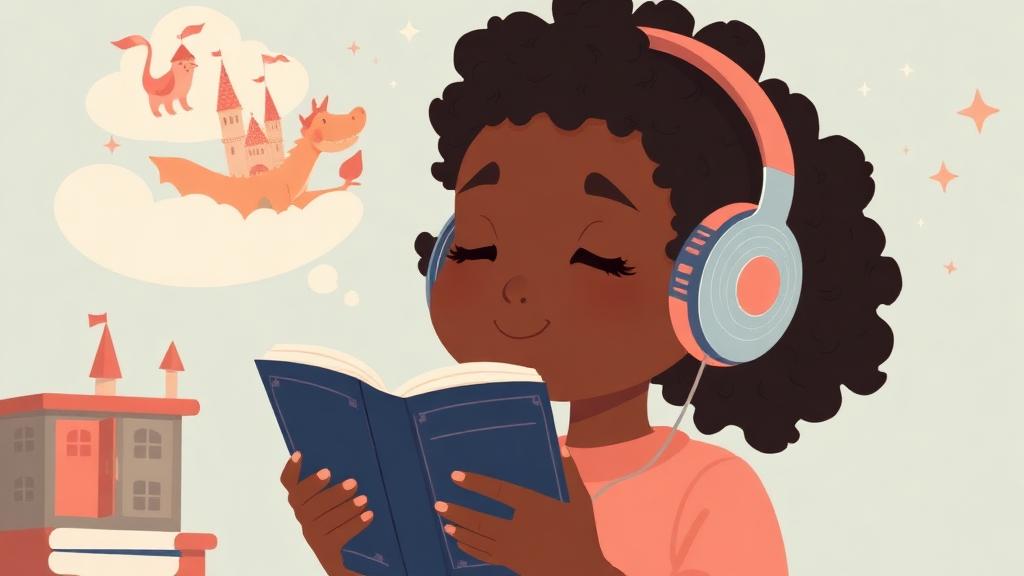
Is listening to an audiobook "really reading"? Absolutely. Audiobooks are a legitimate, valuable form of literacy engagement that can transform reluctant readers, support struggling readers, and enrich the lives of all children.
The Science of Listening
Reading and Listening Use Similar Brain Regions
Research shows that:
- Comprehension processes are similar whether reading or listening
- Vocabulary acquisition happens through both modalities
- Story understanding doesn't depend on the input method
- The brain constructs meaning the same way
What Audiobooks Develop
Listening to audiobooks builds:
- <strong>Vocabulary</strong> – Exposure to words in context
- <strong>Fluency modeling</strong> – Hearing how skilled reading sounds
- <strong>Comprehension</strong> – Following complex narratives
- <strong>Listening skills</strong> – Sustained attention to auditory input
- <strong>Love of story</strong> – Engagement without decoding effort
When Audiobooks Help Most
For Reluctant Readers
Children who resist reading often:
- Find decoding exhausting
- Miss the joy in struggle
- Need success to build motivation
- Benefit from hearing stories come alive
Audiobooks let them experience story magic without the work of decoding, which can reignite interest in books.
For Struggling Readers
Children with reading difficulties (dyslexia, etc.) can:
- Access grade-level content through listening
- Stay on track with peers academically
- Enjoy complex stories their skills haven't caught up to
- Build vocabulary and comprehension while working on decoding separately
For Commuting Families
Car time becomes story time:
- Long drives fly by
- Shared family listening experiences
- No screen time concerns
- Everyone engages together
For Busy Schedules
Audiobooks fit into:
- Getting ready in the morning
- Chores and cleaning
- Downtime between activities
- Waiting rooms and errands
For Advanced Readers
Even strong readers benefit from:
- Exposure to challenging texts
- Different narrator interpretations
- Books that might feel "too long" in print
- Authors they might not choose otherwise
Choosing Quality Audiobooks
Narrator Matters
A great narrator:
- Uses distinct character voices
- Maintains consistent pacing
- Brings emotion appropriately
- Doesn't overshadow the text
Age-Appropriate Length
- <strong>Toddlers (1-3)</strong>: 5-15 minutes
- <strong>Preschoolers (3-5)</strong>: 15-30 minutes
- <strong>Early Elementary (5-8)</strong>: 30-60 minutes per session
- <strong>Upper Elementary (8-12)</strong>: Full chapter books over multiple sessions
Award Winners and Recommendations
Look for:
- Odyssey Award winners (best audiobooks for youth)
- Listen Up! recommendations from ALA
- AudioFile Magazine reviews
- Recommendations from librarians
How to Use Audiobooks Effectively
Active Listening Strategies
Encourage deeper engagement:
- <strong>Pause and discuss</strong> – Stop to talk about what's happening
- <strong>Predict</strong> – "What do you think will happen next?"
- <strong>Connect</strong> – "Does this remind you of anything?"
- <strong>Question</strong> – "Why do you think the character did that?"
Pair with Physical Books
"Read along" listening:
- Child follows text while listening
- Builds sight word recognition
- Connects spoken and written words
- Supports readers at the edge of their ability
Create Listening Rituals
Make audiobooks special:
- Designated audiobook time (car, dinner prep, before bed)
- Family listening sessions
- Solo listening with headphones as a privilege
- Cozy listening spaces
Audiobooks vs. Reading: Not a Competition
Both Have Value
Reading builds:
- Decoding skills
- Visual word recognition
- Reading stamina
- Left-to-right tracking
Listening builds:
- Vocabulary through context
- Fluency models
- Comprehension endurance
- Enjoyment of complex texts
A Balanced Approach
The goal isn't to replace reading with listening—it's to create a rich literacy life that includes both. Think of audiobooks as another tool in your toolkit, not a shortcut.
Common Concerns Addressed
"Isn't listening lazy?"
Listening to audiobooks requires sustained attention, vocabulary processing, and comprehension—cognitive work that's different from, not easier than, reading.
"Won't it hurt their reading development?"
Research shows audiobook use doesn't harm reading development. For struggling readers, it can actually improve motivation and vocabulary, which supports reading growth.
"They should be reading 'real' books."
All engagement with stories has value. A child who listens to audiobooks is developing literacy skills, building vocabulary, and learning to love stories.
"They zone out and don't listen."
This happens with reading too! Try:
- Shorter listening sessions
- More engaging narrators
- Books matched to interests
- Active listening strategies
Where to Find Audiobooks
Free Options
- <strong>Libby/OverDrive</strong> – Library audiobooks on your phone
- <strong>Hoopla</strong> – Another library streaming option
- <strong>Spotify</strong> – Some free audiobooks available
- <strong>YouTube</strong> – Some public domain audiobooks
- <strong>Learning Ally</strong> – Free for qualifying children with reading challenges
Subscription Services
- <strong>Audible</strong> – Large selection, monthly credits
- <strong>Scribd</strong> – Unlimited audiobooks with subscription
- <strong>Epic!</strong> – Children's books including audio
Individual Purchases
- <strong>Libro.fm</strong> – Supports local bookstores
- <strong>Google Play Books</strong> – A la carte purchasing
- <strong>Apple Books</strong> – Audiobooks for Apple devices
Track Audiobooks Too!
Use Readloops to:
- Log audiobooks alongside print books
- Track listening time and titles
- Celebrate audiobook completions
- See the full picture of your child's reading life
Audiobooks aren't cheating—they're reading. They open doors for children who struggle, complement reading for strong readers, and make stories accessible anywhere, anytime.
The story matters more than the delivery method. Whether eyes scan pages or ears hear words, imagination takes flight.
Topics
Track Your Child's Reading Journey
Use Readloops to log books, set reading goals, and celebrate milestones. It's free to start!
Get Started Free