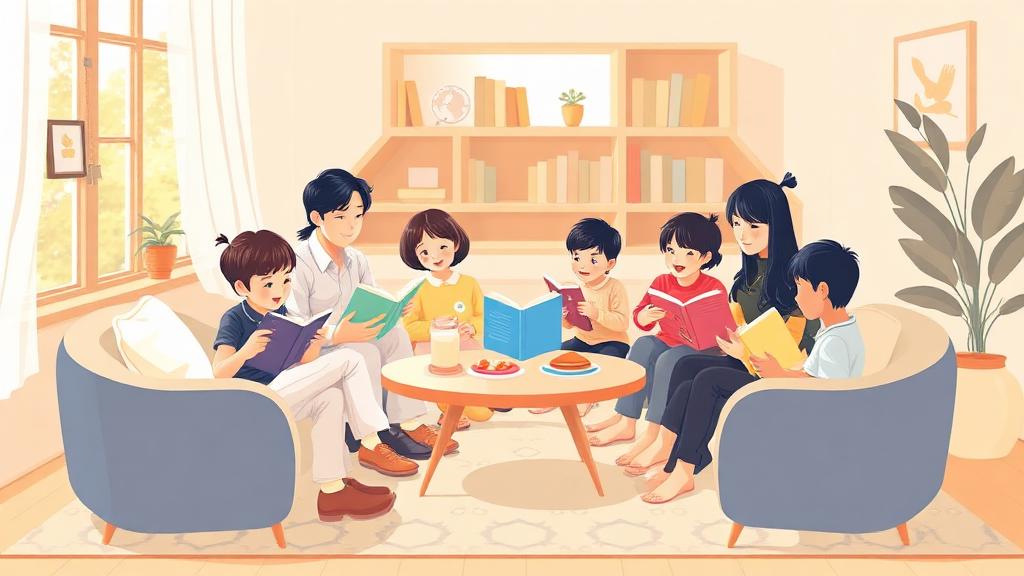
In a world of busy schedules and separate screens, a family book club creates something rare: shared experiences, meaningful conversations, and memories built around stories. Here's how to make it work for your family.
Why Start a Family Book Club?
Benefits for Everyone
For Children:
- Develops deeper comprehension through discussion
- Expands vocabulary and exposure to complex ideas
- Creates positive associations with reading
- Builds confidence in sharing opinions
For Parents:
- Quality time with focused attention
- Window into children's thinking
- Opportunity to share values through stories
- Low-cost, screen-free activity
For the Whole Family:
- Shared reference points and inside jokes
- Practice in respectful discussion
- Memories that last a lifetime
- Tradition that can grow with your family
Getting Started
Step 1: Choose Your Format
Option A: Read-Aloud Club
- One person reads to everyone
- Great for families with younger children or mixed ages
- Allows everyone to experience the story together
- Parent can handle challenging vocabulary in real-time
Option B: Independent Reading Club
- Everyone reads the same book independently
- Works better for older children (8+)
- Allows personal pace and reflection
- Discussion brings different perspectives together
Option C: Hybrid Approach
- Mix both approaches based on the book
- Picture books read aloud; chapter books read independently
- Flexible as children's reading abilities grow
Step 2: Set a Realistic Schedule
- <strong>Weekly</strong> – For short books or read-alouds (most families)
- <strong>Bi-weekly</strong> – For longer chapter books
- <strong>Monthly</strong> – For busy families or longer novels
Consistency matters more than frequency. Pick what you'll actually maintain.
Step 3: Designate Your Meeting Spot
Make it special:
- Living room with cozy blankets
- Backyard with a picnic
- Favorite restaurant or coffee shop
- Rotating locations chosen by each family member
Selecting Books Everyone Will Enjoy
Strategies for Mixed Ages
Read Up, Not Down:
Younger children can often enjoy books above their independent reading level when read aloud or discussed as a family.
Consider These Criteria:
- Multiple themes that resonate across ages
- Humor that works for kids and adults
- Not too scary for the youngest
- Not too babyish for the oldest
- Discussion-worthy content
Book Selection Ideas
Family-Friendly Chapter Books:
- *Charlotte's Web* by E.B. White
- *The One and Only Ivan* by Katherine Applegate
- *Wonder* by R.J. Palacio
- *The Wild Robot* by Peter Brown
- *Hatchet* by Gary Paulsen
- *Holes* by Louis Sachar
- *Number the Stars* by Lois Lowry
Picture Books for All Ages:
- *The Giving Tree* by Shel Silverstein
- *Last Stop on Market Street* by Matt de la Peña
- *Each Kindness* by Jacqueline Woodson
- *The Dot* by Peter Reynolds
Series to Read Together:
- *Harry Potter* by J.K. Rowling
- *Percy Jackson* by Rick Riordan
- *Chronicles of Narnia* by C.S. Lewis
- *The Penderwicks* by Jeanne Birdsall
Letting Everyone Choose
Rotate book selection so everyone gets a turn. Even young children can choose (with guidance). This builds investment and introduces variety.
Making Discussions Fun (Not Forced)
Discussion Starters
Avoid yes/no questions. Try:
- "What would you have done if you were [character]?"
- "What surprised you most about this book?"
- "If you could ask the author one question, what would it be?"
- "Who would you cast in a movie version?"
- "What do you think happens after the book ends?"
Activities Beyond Discussion
- <strong>Craft projects</strong> related to the book
- <strong>Cooking</strong> food mentioned in the story
- <strong>Movie comparison</strong> (after reading the book!)
- <strong>Create alternate endings</strong> together
- <strong>Draw favorite scenes</strong>
- <strong>Act out scenes</strong> as a family
Keep It Light
- It's okay to disagree about a book
- Laughing is encouraged
- No one has to share if they don't want to
- Snacks are mandatory
Troubleshooting Common Challenges
"The kids have such different reading levels!"
Use read-alouds, or split: older kids read chapters aloud to younger ones.
"Someone always hates the book choice."
That's okay! Discuss why it didn't work for them. Learning to articulate preferences is valuable too.
"We can't find time to meet."
Shrink the commitment: even 15 minutes discussing a picture book counts. Combine with existing routines (Sunday breakfast, Friday pizza night).
"The discussions feel forced."
Add activities. Some families connect better while making a craft related to the book than sitting and talking.
"My teenager won't participate."
Give them leadership roles: let them run a discussion, choose a book, or teach siblings something they learned.
Special Event Ideas
Themed Book Nights
- Pajama readings
- Birthday child chooses the book
- Holiday-themed selections
- "Bookiversary" celebrating your club's start
Book-to-Screen Events
Read a book together, then watch the movie and compare.
Book Swaps
Invite another family to swap book recommendations.
Author Studies
Read multiple books by the same author and discuss their style.
Track Your Family's Reading Journey
Use Readloops to log books you've read as a family:
- See your growing family reading history
- Celebrate milestones together
- Set goals for the year ahead
- Remember favorites for recommendations
Starting Tonight
You don't need a perfect plan. Just:
- Pick a book everyone might enjoy
- Set a date for the first discussion
- Bring snacks
- Talk about the story
The magic isn't in the format—it's in the togetherness.
The stories you share become the stories you tell for generations.
Topics
Track Your Child's Reading Journey
Use Readloops to log books, set reading goals, and celebrate milestones. It's free to start!
Get Started Free