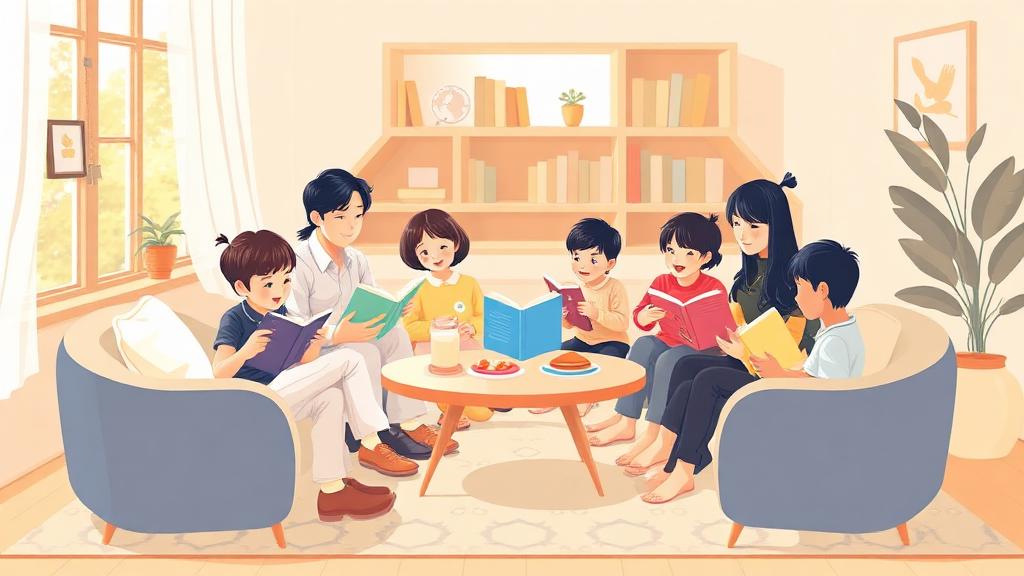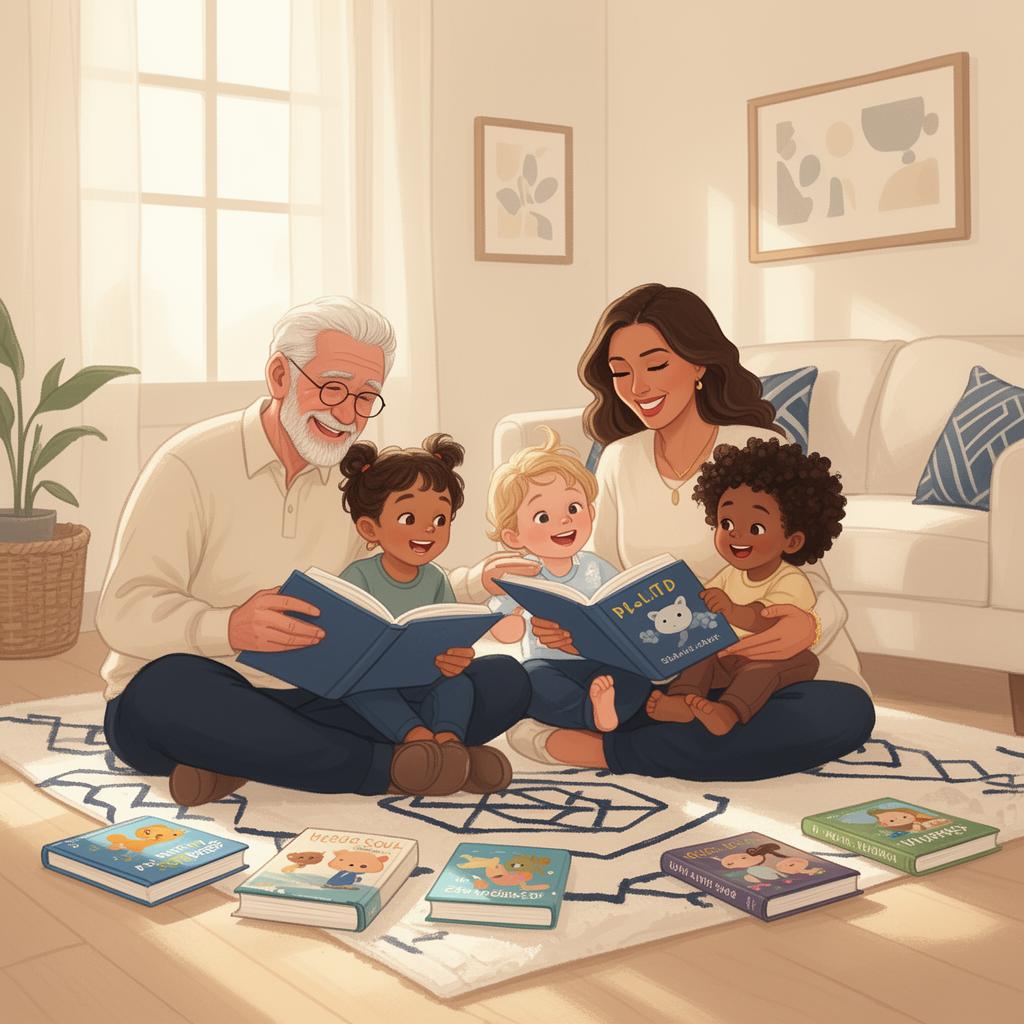
Ask any adult who loved reading as a kid where it started, and the answer almost never sounds like a curriculum. It sounds like a person.
A grandfather who did silly voices. A mom who read just one more chapter. An aunt who mailed a book every birthday. A nanny who sat on the floor with the same picture book seventeen days in a row because the four-year-old asked.
Reading, at its best, isn't a skill a child develops alone. It's a relationship a whole village builds with them.
Why shared reading is bigger than literacy
The research on read-alouds is well-known: vocabulary growth, comprehension, attention, school readiness. But there is a quieter benefit that doesn't show up on standardized tests — belonging.
When more than one trusted adult reads with a child, the child learns something powerful:
- Books are how the people who love me spend time with me.
- My reading life is interesting enough that the grown-ups talk about it.
- I am part of something bigger than just one bedtime routine.
That sense of belonging is what turns a kid who can read into a kid who wants to read — for life.
The problem with single-parent tracking
Most reading logs assume one adult, usually one parent (often Mom), is doing all the logging. The result is predictable:
- Reads at Dad's house don't get counted.
- The grandparents who read every Sunday have no idea what the kid is currently into.
- The babysitter finishes a chapter book — and no one knows it happened.
- One parent quietly carries the entire "reading administration" load.
Worse, the child never sees the village. They only see one person tracking. The shared experience gets flattened into a chore.
What changes when caregivers can contribute
When grandparents, co-parents, and caregivers all log into the same reading loop, three things shift at once:
1. The record finally matches reality
Kids don't read in one house. They read on porches, at Grandma's kitchen table, in car-line, on the couch with the babysitter. A shared log captures the whole life of the reader, not just the slice one parent witnesses.
2. Caregivers feel seen
Grandparents especially light up when they can see what their grandchild is reading this month, and contribute to it. Sending a book becomes thoughtful instead of guesswork. Showing up at a visit with the next book in a series becomes possible.
It also gives non-resident parents, step-parents, and chosen-family caregivers a way to be present in the child's intellectual life every single day — not just on the days they have custody.
3. The child feels the village
When a six-year-old hears, "Grandpa logged that you finished Frog and Toad together — he wants to know which one to send next," something glows in them. The book is no longer just paper. It's a thread between people who love them.
Encouragement, not competition
Here is the trap to avoid: turning shared reading into a leaderboard.
The moment you rank caregivers by reads-per-week, you've broken the magic. The grandma who reads ten minutes on FaceTime once a week starts to feel "less than" the parent who logs nightly. The dad with weekends only starts to disengage. The nanny stops logging because it feels like a performance review.
Contribution is not the same as competition. A healthy family reading culture celebrates every read — the single bedtime story from the grandparent across the country counts exactly as much, emotionally, as the nightly routine.
At Readloops we deliberately designed the "Reading Crew" view to show contribution warmly, with affectionate labels like "Joined the loop" and "Story-time hero" — and no leaderboards, no streaks per person, no rankings. Just a quiet acknowledgement: these are the people who showed up.
How to invite your village in (without overwhelming them)
If you've been tracking solo, here is the gentlest way to expand the circle.
Start with one person
Pick the caregiver who already reads with your child most often outside your home — a co-parent, a grandparent, a nanny. Invite just them first. Get the rhythm down.
Tell them what they're being invited *to*
People hesitate to "join an app." They happily join "the shared reading log for the kids." Frame it as: "I want you to see what they're reading and add the books you read with them. No pressure, no streaks — just so we're all in the loop."
Make logging absurdly easy
If logging takes more than 30 seconds, caregivers won't do it. Use a tool with a one-tap "log a read" button (Readloops takes about two taps from open to logged). The lower the friction, the more honest the record.
Celebrate, out loud, what comes back
When Grandpa logs his first read, mention it at dinner. "Grandpa read The Gruffalo with you on Sunday — he loved it." The child connects the dots. The grandparent feels noticed. The system reinforces itself.
Expand the circle slowly
Once one caregiver is comfortably contributing, add the next. A family reading loop with three or four engaged adults is genuinely transformative. Ten lukewarm ones is noise.
A note for co-parents
Shared reading logs are especially powerful across two households. They sidestep the awkwardness of texting "what did you guys read this weekend?" by simply showing it.
Even better: when both parents can see the running list, neither one ends up unknowingly re-reading the same chapter book the other just finished. The child gets continuity. The parents get a small, low-stakes way to co-parent the joyful parts of childhood, not just the logistics.
A note for grandparents
If your grandkids live far away and you've ever wondered how to stay meaningfully present in their lives between visits — this is one of the most overlooked answers.
Read with them on video calls. Log the read. Send a book that connects to what they're currently into. Show up, in their reading life, every single week. By the time you visit in person, you already share a library of stories.
The shape of a family that reads together
You don't need every adult logging every night. You don't need perfectly equal contribution. You don't need a chart.
You need a child who knows, in their bones, that the grown-ups around them care about what they're reading. You need a record that survives moves, divorces, school years, and grandparents' memories. You need a small, warm place where the whole village can show up for the same kid.
That's what shared reading actually is. Not a log. A loop. A family-shaped one.
Ready to invite your village in? [Start a free Readloops family](/auth) and add caregivers in two clicks. Pro unlocks unlimited caregiver invites across your whole family for $2.99/month or $29/year.
Topics
Track Your Child's Reading Journey
Use Readloops to log books, set reading goals, and celebrate milestones. It's free to start!
Get Started Free