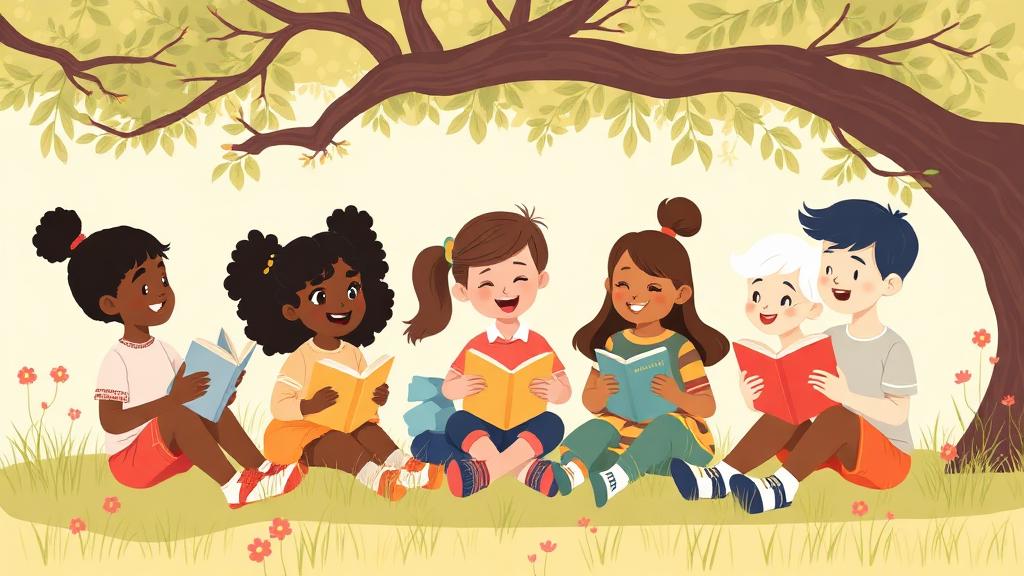
Every child deserves to see themselves in books. And every child benefits from seeing others whose lives and experiences differ from their own. Diverse books aren't just nice to have—they're essential for raising readers who understand and embrace our complex world.
Windows, Mirrors, and Sliding Glass Doors
Dr. Rudine Sims Bishop introduced a powerful metaphor for how children experience books:
Mirrors
Books that reflect a child's own identity and experiences:
- Validates their existence
- Affirms their worth
- Shows they matter
- Builds positive self-image
When children never see themselves in books, the message is clear: your story isn't worth telling.
Windows
Books that offer views into others' lives:
- Expands understanding
- Builds empathy
- Challenges assumptions
- Broadens worldview
Children who only read about people like themselves miss crucial opportunities to understand others.
Sliding Glass Doors
Books that let readers step into new experiences:
- Immersive understanding
- Emotional connection
- Deeper empathy
- Lasting impact
The best diverse books work as all three: mirrors for some readers, windows for others, and doors for everyone.
The Research Behind Diverse Reading
Empathy Development
Studies show that reading fiction—especially diverse fiction—measurably increases empathy. When children read about characters whose experiences differ from theirs:
- They develop "theory of mind" skills
- They practice perspective-taking
- They build emotional vocabulary
- They understand that others have different inner lives
Academic Benefits
Research indicates diverse books also support learning:
- Increased engagement for children who see themselves represented
- Better reading comprehension when content feels relevant
- Improved critical thinking about social issues
- Greater motivation to read
Social-Emotional Growth
Diverse reading contributes to:
- Reduced prejudice and stereotyping
- Increased cultural competence
- Better conflict resolution skills
- Stronger sense of justice
What "Diverse Books" Really Means
Diversity in children's literature includes:
Identity Representation
- <strong>Race and ethnicity</strong> – Characters of all backgrounds
- <strong>Disability</strong> – Physical, developmental, invisible disabilities
- <strong>Family structures</strong> – Single parents, grandparents, foster families, LGBTQ+ parents
- <strong>Religion and culture</strong> – Various traditions and practices
- <strong>Socioeconomic status</strong> – Working-class families, poverty, wealth
- <strong>Gender identity and expression</strong> – Beyond stereotypes
- <strong>Body diversity</strong> – All shapes, sizes, abilities
Experience Representation
- Immigration and migration
- Multilingual families
- Adoption and foster care
- Mental health experiences
- Grief and loss
- Geographic diversity (rural, urban, global)
Quality Matters
Not all diverse books are created equal. Look for:
- <strong>Authentic voices</strong> – Written by people from the represented community
- <strong>Complex characters</strong> – Not defined solely by their identity
- <strong>Accurate representation</strong> – Culturally respectful portrayal
- <strong>Natural integration</strong> – Diversity isn't the "issue" of the book
Finding Diverse Books
Trusted Lists and Resources
- <strong>We Need Diverse Books</strong> – Nonprofit promoting diverse literature
- <strong>Cooperative Children's Book Center</strong> – Annual diversity statistics
- <strong>American Indians in Children's Literature</strong> – Native representation reviews
- <strong>Disability in Kidlit</strong> – Reviews focused on disability representation
- <strong>Social Justice Books</strong> – Curated book lists
Asking Good Questions
When selecting books, consider:
- Who wrote this book? What's their relationship to the content?
- Are diverse characters central or token?
- Is this a "problem book" where diversity is the conflict?
- Would readers from this community see themselves positively?
- Does this book challenge or reinforce stereotypes?
Building a Diverse Home Library
- Audit your current collection—what's missing?
- Intentionally add books that expand representation
- Include diverse books about universal experiences (friendship, school, family)
- Don't only choose "issue books"—diverse characters should have adventures too!
Reading Diverse Books Well
How to Discuss
When reading together:
- <strong>Observe and notice</strong> – "I see the family in this book..."
- <strong>Make connections</strong> – "This is different from/similar to our family because..."
- <strong>Ask open questions</strong> – "How do you think this character feels?"
- <strong>Follow their lead</strong> – Answer questions honestly, age-appropriately
- <strong>Normalize differences</strong> – Treat diversity as ordinary, not unusual
Avoid Common Mistakes
- Don't make diversity "exotic" or unusual
- Don't explain away differences as lesser
- Don't avoid topics that feel uncomfortable
- Don't treat one book as representing an entire group
- Don't skip over questions—lean into them
Age-Appropriate Approaches
Babies and Toddlers (0-3)
- Board books with diverse faces and families
- Normal daily activities featuring various characters
- Simple representation without explanation needed
Preschoolers (3-5)
- Picture books with diverse main characters
- Stories about families of all kinds
- Books that validate differences
Early Elementary (5-8)
- Diverse protagonists in adventure and humor
- Historical fiction introducing different perspectives
- Books where diversity is present but not the plot
Upper Elementary (8-12)
- More complex exploration of identity and social issues
- Historical and contemporary fiction with diverse protagonists
- Books by #OwnVoices authors
Common Concerns Addressed
"I don't want to draw attention to differences."
Children notice differences early. Books help them develop positive frameworks for understanding what they observe. Silence doesn't prevent awareness—it prevents understanding.
"These topics are too heavy for kids."
Many diverse books are simply about kids being kids—going on adventures, solving problems, making friends. Diversity doesn't have to mean trauma.
"I can't find good diverse books."
They exist! The resources listed above can help. Ask librarians, browse dedicated diverse booksellers, and follow diverse book accounts on social media.
Track Your Diverse Reading
Use Readloops to:
- Log books featuring diverse characters
- Track representation across your reading
- Set goals for expanding your library
- Celebrate exposure to new perspectives
Every book shapes how children see the world—and their place in it. Diverse reading creates readers who are prepared to thrive in a diverse world.
The books we share with children become the lenses through which they see humanity. Choose lenses that show the full picture.
Topics
Track Your Child's Reading Journey
Use Readloops to log books, set reading goals, and celebrate milestones. It's free to start!
Get Started Free